• Skip to primary navigation
  • Skip to main content

The Rules Of The Game

Breakthrough the Debt Slavery Matrix!

  • Home
  • Our Blog
  • Contact
  • The Private Contract
  • Show Search
Hide Search

The Chessboard

Anthony Rojas · September 3, 2026 · Leave a Comment

Introduction

In order for you to grasp the fullness of these post you need to understand some foundational information.

There are two jurisdictions at play (juris = right/law, diction = speak/spoken) that are relevant to this conversation. Two different ways laws are expressed. One is Public and the other is Private. Each one has its own unique set of laws or “guidelines” when dealing with situations that fall under its care. These two jurisdictions coexisted like the white/black squares and pieces on a chessboard. Distinct, easily told apart and were never commingled.

  1. Public law (statutory) = Governs the relationship between the state and federal government and the people that erected said government.
  2. Private Law (civil) = regulates relationships, disputes, and transactions strictly between the people.

In order for one to be a part of the Public jurisdiction one must contract into it with the Forum/Venue (location = Fed/State government) or have met the “Minimum Contacts Doctrine” meaning a person or business has enough ties to a specific Forum/Venue that it is legally fair for a court in that state to exert it’s power over them. (ie agreeing to play the game or sitting at the game table). Public regulates the rules of the game (Commerce)

In order for one to be a part of the Private jurisdiction, one all has to do is show signs of life and be present in the Forum/Venue. (being born on the land mass). Private regulates the rules on how people treat each other, at the game table

The Law from the lens of a chessboard

White squares are private. Your land, your labor, your contracts, your money. Common law. Rights you hold because you exist. Rights woven into the very fabric of your existence.

Black squares are public. Statute. License. Privilege. Regulated commerce. Rules that reach you because you stepped onto that square.

This series reveals the path that was taken to paint the white squares black.

Brief History on the Chessboard

Before we had the constitution of the United States, we operated under the Articles of Confederation for the first decade of our Independence. Under the Articles of Confederation, the people were protected by the state government in which they chartered. Congress could not tax you. It had no power to reach into a single pocket in America.

When Congress needed money it sent a requisition to the states, i.e. a bill, and each state decided how to raise it, or whether to bother. Lets say Philadelphia needed money to pay war debts or wanted to enforce a mandate, they had no legal authority to touch you, it could only request it from the state to collect it on their behalf. The state acted as a total shield between the natural person and the federal apparatus.

Think about what this meant in daily life. A federal agent had no business knocking at your door or sending you direct correspondence about money. They had no reason to even know your name.

If they had a grievance about a tax, they took it up with your local government, and we took it up with the officials who we associated with in our local community, close enough that we might even see them at church or the grocery store. This “state shield” had no workaround, congress had to go through your state every time. This sounded great, but there was an issue.

Friction

The states routinely paid but a fraction of what was requested by congress, and sometimes it would fall short. Because the states were sovereign, the Articles gave Congress no enforcement mechanism. If a state ignored the bill, Congress could not do anything about it. Between 1781 and 1787, states regularly shortchanged the national government, paying only a fraction of what they owed, pushing the young nation toward bankruptcy.

Because the federal government had no direct taxation power, it also had no federal tax collectors, no federal courts to try tax evaders, and no federal bureaucracy interacting with the public. If you were a farmer in Pennsylvania, your tax burden was entirely determined by the Pennsylvania legislature. If you couldn’t pay, it was a local sheriff or a state tax collector who knocked on your door, not a federal agent. The national government was functionally invisible to the average person.

A real problem did exist…but…keep this in mind…
A real problem is the most effective tool ever devised for moving, removing or puncturing a Shield (Wall of Protection). You are going to watch that exact pattern eight more times in this series (1863, 1913, 1933, 1971, 2008) and every single time the crisis will be genuine (although the causes these problems are questionable, at times highly convenient), and every single time the thing built to solve the “problem” will outlive it. This has raised suspicions of possible “engineered emergence” throughout history.

National Unrest

Because that “wall” between the federal government and the individual citizen meant the United States was, mechanically speaking, just a giant, unfunded group project.
4 major issues lead to the first Constitutional Convention to address these matters.

  1. The National Bankruptcy

The United States ended the Revolutionary War owing millions to France, Dutch bankers, and its own citizens (who had bought war bonds). But because Congress could only ask states for money, the national treasury was completely empty. Congress petitioned the states for funds but barely received enough to cover the interest.

  1. Mutiny (Newburgh Conspiracy)

The most immediate danger of having no direct tax revenue was the military. A group of high-ranking officers circulated letters threatening to march on Congress, refuse to disband, and essentially stage a military coup to force the government to pay them at gunpoint. George Washington personally pleading with his officers, famously putting on his reading glasses and saying, “I have not only grown gray, but almost blind in the service of my country” that defused the mutiny. If Washington hadn’t been in the room, the United States might have become a military dictatorship before it ever became a constitutional republic.

  1. State vs. State (Economic Warfare)

Because there was no overarching economic authority, states started acting like rival countries. New York started slapping heavy tariffs on cabbages from New Jersey and firewood from Connecticut. States started printing their own paper money, causing hyperinflation that wiped out the savings of ordinary people. The national economy ground to a halt because trade across state lines became a chaotic, punitive mess.

  1. The Breaking Point: Shay’s Rebellion (1786-1787)

The ultimate crisis happened in western Massachusetts. The state legislature, trying to pay off its own war debts, levied crushing taxes on rural farmers, requiring payment in hard gold and silver, which the farmers didn’t have. When farmers couldn’t pay, the state courts started seizing their farms and throwing them in debtors’ prison. Led by Daniel Shays, a former Continental Army captain, thousands of armed farmers revolted. They marched on the courts and shut them down, eventually attempting to seize the federal armory at Springfield.
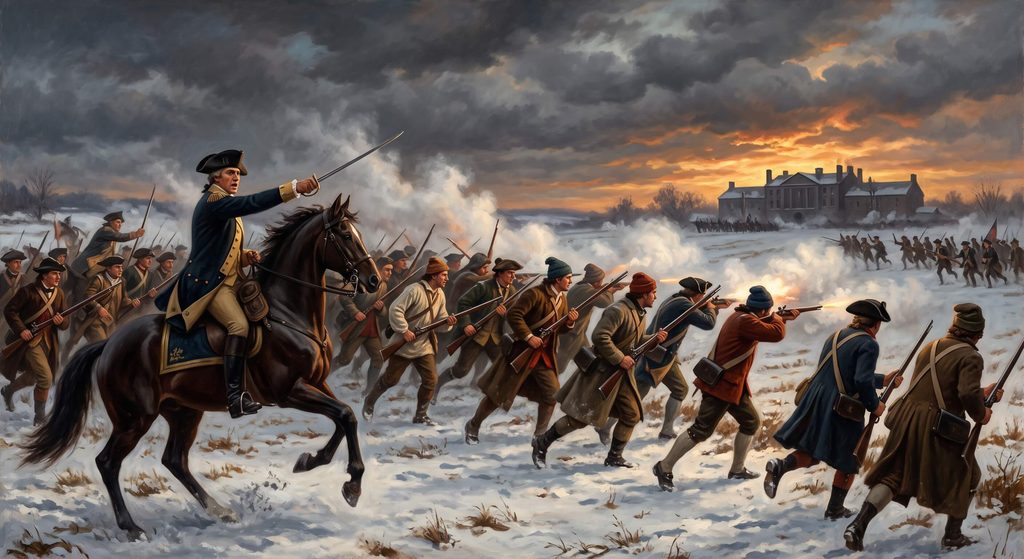
The Fatal Flaw: Congress tried to raise a federal army to put down the rebellion, but they couldn’t force the other states to pay for it. The federal government was completely paralyzed. Massachusetts had to rely on a privately funded militia to finally crush the uprising.

The Aftermath: George Washington, Alexander Hamilton, and James Madison realized that if a localized rebellion could nearly topple a state government while the federal government sat by helplessly, the “wall” of the Articles of Confederation was a suicide pact.

The New Board Arrives

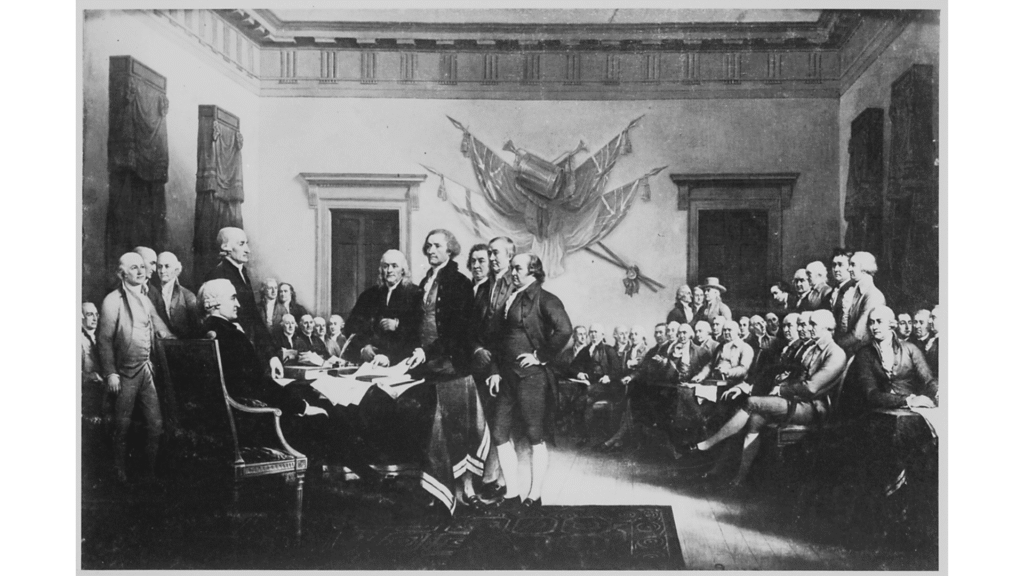
In the summer of 1787, fifty-five men locked themselves inside the Pennsylvania State House and weighed their options. They chose to scrapped the Articles of Confederation entirely.

In its place, they engineered a new machine designed to completely bypass the state legislatures. They drafted a Constitution that would grant the central government direct jurisdiction (the power to tax, draft, and govern the individual citizen without ever asking the state for permission. They had built the door in the wall, and sought to give it life.

By its own terms, this new Constitution was just a proposal until it was ratified by special conventions in at least nine states. The men who wrote it (the Federalists) now had to convince the states to willingly hand over their status as the ultimate shield for their citizens. Those who recognized the danger of this new consolidated power (the Anti-Federalists) sounded the alarm. Nowhere was this clash more dramatic, or more critical to the survival of the republic, than in Richmond, Virginia in the summer of 1788.

The Virginia convention: Nine states had to ratify, and without Virginia, the draft would have no life. Patrick Henry (one of the most influential Founding Fathers) showed up to kill the proposed Constitution, stating that adding “We The People” instead of “We the States” would consolidate all the people of all the states into one national government and do away with the protections that the states offered from being directly impacted by the National Government.

What he saw was that compact between states is a treaty. The parties are governments. If the national government wants something from you, it must go to your state, and your state can say no. A compact with the people is a different animal entirely. The parties are you and Washington City. Your state is not you protector anymore.

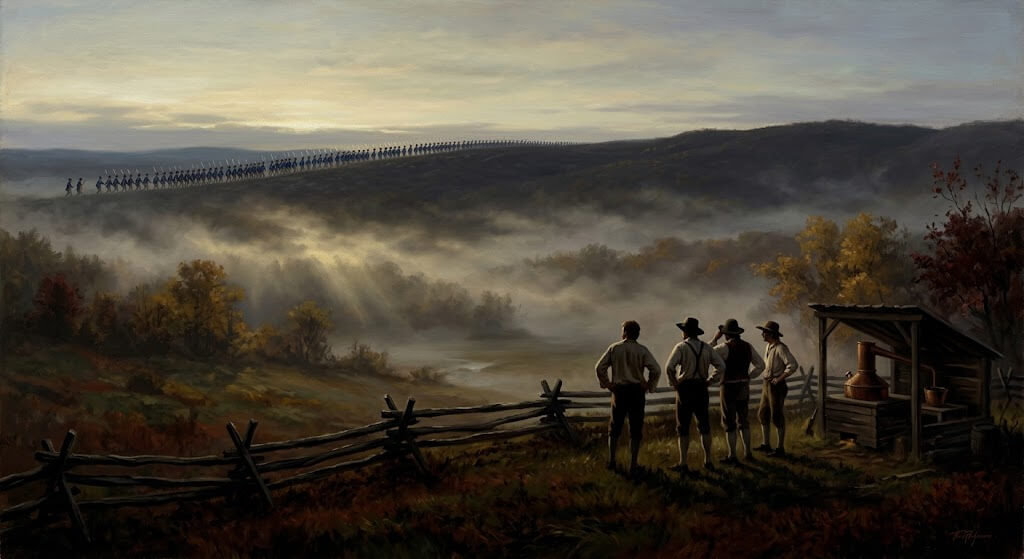
The Whiskey Rebellion: The State wall of protection, now had a way through. Within 3 years of its ratification, the way through was used. On March 3, 1791, Congress enacted an excise on distilled spirits (proposed by Alexander Hamilton) citing (Article 1, section 8, the power to lay and collect taxes) designed to generate federal revenue to pay off the national debt from the Revolutionary War. For farmers in western Pennsylvanian whisky was not a luxury, it was a stable currency they used where hard silver and gold coin were virtually non existent. And Federal collectors went out to the farms…

By 1794 the resistance was open, and Washington federalized roughly thirteen thousand militia, a force larger than most armies he commanded during the Revolution, and rode out at their head to put it down. Six years after Henry made his statements in Richmond, a president was riding toward American farmers (over a tax the federal government had collected from them directly) in uniform…The new chessboard had been born.
The Lifting of the Veil of Obscure History

Anthony Rojas · September 3, 2026 · Leave a Comment

INTRODUCTION

When in the course of human events, it becomes necessary for one people, to organize information that compels their fellow brethren to see for the first time, the truth, not by right, but by duty owed to the supreme sovereign of the world, it becomes necessary for these people to declare the causes that impel them to such actions.

We hold these truths to be self-evident, that ALL man is created equal, that they are endowed by their Creator with certain un-a-leinable Rights. Among these are Life, Liberty, and the pursuit of happiness. That governments are instituted among man to secure these rights, and when they have failed to do so, it becomes the duty of the people to protect them by any means necessary. Inherent rights are not given by man or machine, so they have no right to lay claim to them or dissolve them. They cannot be stolen, legislated away nor hidden from them, so long as the light of liberty burns in their hearts and minds.

This series was created to lift the veil from what we are taught to believe, versus what history prudently dictates. That we not continue wondering aimlessly through the darkness which is chaotic ignorance, so we may be able to plant our feet firm on solid ground and become beacons of hope to our fellow man. Use this information to know thy enemy, and be no more like children tossed to and fro and carried about with every wind of doctrine, by the slight of men and their cunning craftiness, whereby they lie in wait to deceive, be ye therefore wise as serpents and harmless as doves.

“The only thing necessary for the triumph of evil is for good men to do nothing” – Edmund Burke

The Rules of the Game

In life, it is common knowledge that, in order for you to win a game, you must first learn the rules and how to play it. I would like to add that in certain games, you must learn the unwritten rules just as much as those expressed on paper. The rule I am going to attempt to open your eyes to in this series is the Rule, or Art, of deception that is expressed in a more thematic sense than direct, although, they do publicly publish that they deceive us, using colorful words.


The theme of deception is a feature of this game. It is a function as well as a strategy. To use following example I will be presenting is to severely undermining the magnitude of the deception, as you will see, but it will give you a perceivable anchor to ground to. The feature of deception in this game is what “bluffing”or having a “poker face” is to poker, an unwritten aspect of that game. If you want to have an edge over your opponent, you must use it, and be damn well good at it too.


“Never attempt to win by force what can be won by deception.”
― Niccolò Machiavelli, The Prince

It has not been as easy task to compile such complex information in such a way that the common man can digest it, let alone, in a way that they don’t process it through a lens of hopelessness. Yet here we are, years of work complied, not just by myself, but the countless liberty loving people that have made work like this possible. This series of posts will be first of their kind.

It is time brothers and sisters to remove the veil from before thine eyes, so that you may see clearly, the truth, and the truth shall make you free…

The Illusions of the Matrix

carleetz · August 3, 2026 · Leave a Comment

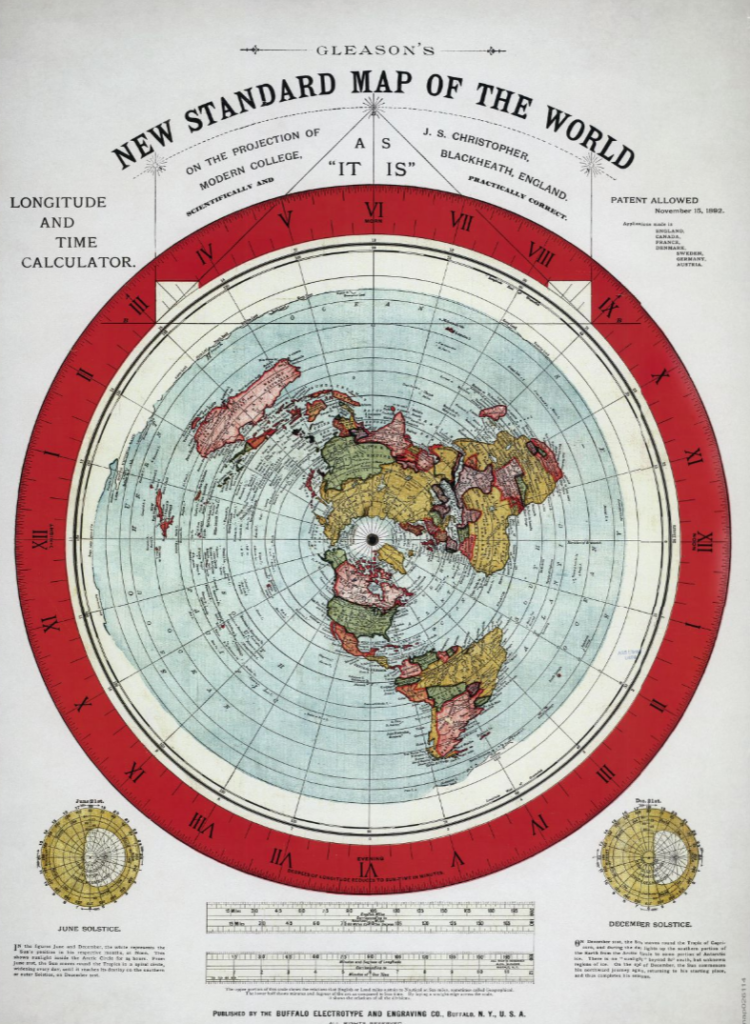
For most of our lives, we were taught the greatest lie ever engineered: that we live on a spinning ball hurtling through space at thousands of miles per hour. From elementary school onward, the Public Statutory Matrix conditions every child to believe in a fictional world — a globe covered in water, spinning faster than we can imagine, with floating primates that “evolved” into humans, and a cosmic theater designed to make you doubt your senses and distrust your own mind.

Yet when we wake up to the truth — that we live on a stationary and non‑rotating, level plane, exactly as our earth is described in every U.S. military flight manual (to include mine, I was a CG pilot) — we must ask the only question that matters: Why the lie?

The answer is simple:

If they can convince you that you live in a fictional world, they can convince you that you are fictional and not specially created, and an insignificant grain of sand in the totality of an infinite and ever expanding universe.

On the fictional globe, your identity is not recognized as a Private, moral and sentient being created by God or your Creator. Instead, you are reduced to a Legal Fiction — a Strawman — an artificial character that exists only inside their fabricated world. And under the maxim of law, (“He who creates it, owns it”) the Public & Statutory Matrix had to create a fake world in order to claim ownership over the fake character they assigned to you.

This is why the lie begins in childhood.

They need you to believe in their world, not the natural, lawful world you actually inhabit.

On their fictional globe:

  • They register you like property through a birth certificate.
  • They assign you a Social Security Number as a tracking identifier.
  • They create corporations — more Legal Fictions — to populate their artificial jurisdiction.
  • They invent “globalism,” “global warming,” and “globalists,” none of which exist in the natural world.
  • They issue fiat currency backed by belief, not substance.
  • They impose taxes at every level of life, justified only within their fictional construct.

Because you believe, you consent.

Because you consent, they control you.

They do not want you to trust your senses, your mind, or your Creator.

They want you to trust their experts, their institutions, and their currency. These same experts force bioweapons on us and call them vaccines. They tax all of your hard work and call it “paying your fair share”. And they issue currency that isn’t backed by substance and they print it to fund the government.

They want you to believe the world is spinning, rotating, tilting, wobbling, and flying through space — anything to keep you disoriented and dependent on their manufactured authority. And inside this spinning world you evolved from monkeys.

But the natural world is not spinning.

It is not rotating.

It is not hurling through space at millions of miles per hour.

It is level, stable, ordered, and covered by a firmament — a world designed, not accidental.

Once you see the illusion, you understand the trap:

The Legal Fiction Strawman can only function inside their fictional world.

As long as you operate as the Strawman, they control you.

The awakening is simple:

Step out of the Legal Fiction they control by not believing their nonsense and their unnatural “science”. Step out of their global money, global climate change, global media, global sustainability, and anything to do with their globe.

Step into the Private Domain, think for yourself, trust in your instincts, and establish a Private Trust — the legal strawman that you control. Once you loosen their grip on your soul, you can start living in a world where we are free, and our lawful responsibility is to not cause harm, injury or loss.

This is the moment you stop living as the character they created and begin operating as the Private and Special being you truly are. Let your spiritual awakening begin.

The Monopoly Loophole: How 1933 Rewrote the Rules of American Wealth

carleetz · July 22, 2026 · Leave a Comment

After 1933 (and finalized in 1971): The U.S. moved to a pure fiat system. The Federal Reserve acts as the ultimate Banker. When a crisis hits (like 1938, 2008, or 2020), the Fed uses “quantitative easing” (printing more paper slips) to keep the game from freezing up, inflating the total amount of money in play while the actual physical assets (the land) remain fixed.

“Go to Jail” and the Legal Safety Valves

The “Just Visiting” vs. “Go to Jail” dynamic captures the split in the American legal system.

For the average citizen, an unlucky roll or a violation of the rules sends you directly to the box, halting your ability to move or collect wages.

However, inside the rules of Monopoly, there is a famous loophole: players in Jail can still collect rent on their properties. This perfectly symbolizes institutional wealth in America. Even if a corporation or an executive faces legal gridlock, their capital, assets, and automated systems continue to generate passive income regardless of their personal freedom.

THE PARALLELS

In order to play Monopoly the game, one has to agree to play, otherwise this would be considered a crime. The same thing within the Public sector within the united States, prior to the 1933 act which expanded the governments powers.

Before 1933, the federal government (the Banker) had to play by the strict, standard rules printed on the box (The Constitution).

The players bought properties, traded with each other, and collected rent.

The Banker’s job was strictly limited to handing out cash at GO, managing the bank’s property deeds, and collecting standard taxes when someone landed on Income Tax or Luxury Tax.

The Banker could not take your properties away, nor could they close down the railroads or utilities just because the game was going poorly.

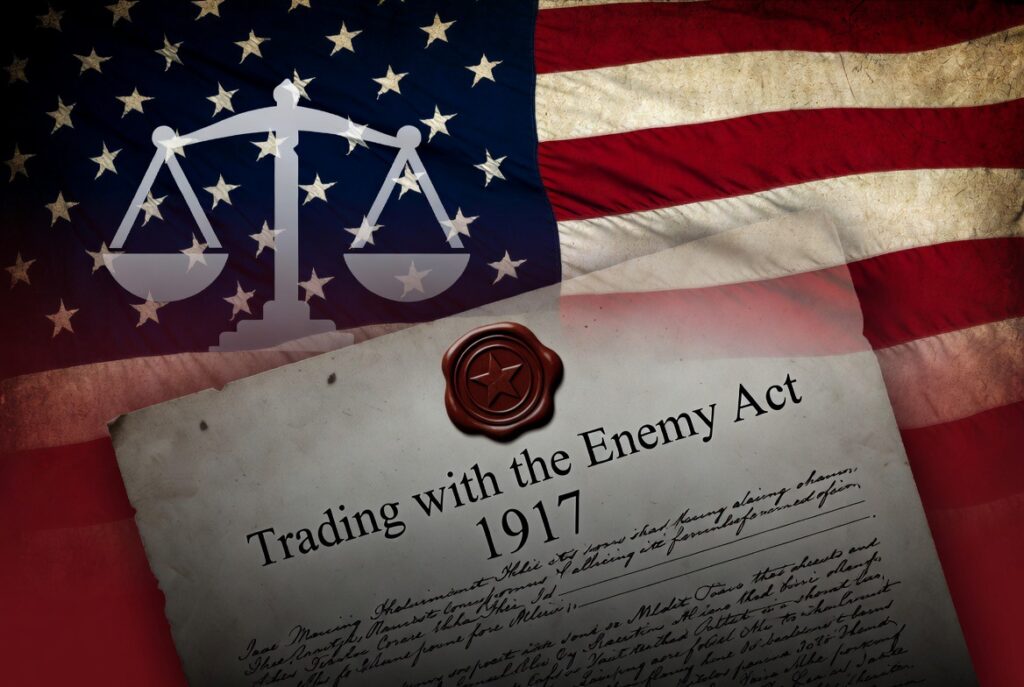
When the Trading with the Enemy Act was created in 1917, it was like the Banker drawing a highly specific, powerful Chance Card during a crisis (World War I).

The card read: “If another player attacks the board from the outside, the Banker can seize their properties and freeze their assets.”

Crucially, the fine print on the card stated: “Cannot be used against regular players actively sitting at the table.” Once World War I ended, that card was placed at the bottom of the deck.

In 1933, when the economy crashed and the game was freezing up, the Banker didn’t just play by the rules to fix it. Instead, they pulled that old wartime Chance Card back out and literally crossed out the fine print.

By adding the words “or during a national emergency,” the Banker changed the card to read:

“If the Banker decides the game is in a crisis, the Banker can use wartime powers against the players sitting at the table.”

The moment FDR declared the Bank Holiday and used the amended TWEA, the Banker effectively shouted, “Time out!” and froze the entire board.

Closing the Banks: In Monopoly terms, the Banker locked up all the cash. If you wanted to roll the dice or make a trade, you couldn’t.

The Gold Forfeiture (Executive Order 6102): This was the ultimate Banker move. The Banker looked at the players and said, “Every piece of gold money you have in your hand must be handed over to the Bank immediately. In exchange, I will give you these new paper bills that I am printing. If you hide any gold in your pocket, you go straight to Jail. Do not pass GO, do not collect $200.”

By using the TWEA to turn war powers inward, the federal government shifted from being a mere referee of the board game to the owner of the board itself.

Before the maneuver, the players controlled the commerce (the properties and cash) and the government just managed the framework. After the maneuver, the government held a permanent “Emergency” card that allowed them to rewrite the rules of the board at any time, changing the game from a free-market competition into a system where you can only move your token if the Banker grants you a license to roll the dice.

How do we fit into this?

This is where the fun begins

The Title Deception: Who Really Owns Your World?

carleetz · July 17, 2026 ·

From the moment you enter the commercial arena, you are handed a script. You are taught to sign your name on the dotted line, apply for licenses, accumulate debt, and compete under a set of rules explicitly designed to keep you on the defensive.
But the biggest trap isn’t the debt itself—it’s the fundamental misunderstanding of Title and Capacity.
The Illusion of Ownership
Most people spend their entire lives working to “own” assets. They buy a car, purchase a home, or build a business, believing that having their name on the public registry equates to true ownership.
In the public commercial theater, however, standard registration often splits title into two pieces:

  1. Legal Title: The right to control and manage the property.
  2. Equitable Title: The right to use and benefit from the property.

When you register an asset directly in your individual public capacity, you inadvertently expose it to the friction of the public domain—liability, lawsuits, and systemic vulnerability. You are operating as a debtor competing in a venue where the deck is already stacked against you.
Shift from Competition to Administration
The most effective strategy employed by those who understand asset protection frameworks is simple: They stop competing and start administering.
Instead of holding assets in a vulnerable, individual public capacity, assets are structured entirely within a private framework. By operating strictly in a designated representative capacity, the relationship to the asset completely changes.

  • The Private Domain: The private structure holds the legal title to the assets, removing them from your personal liability profile.
  • Administrative Capacity: You step off the stage as an exposed individual debtor and instead operate purely from an administrative position executing structural duties.

Dropping the Script
True asset protection isn’t about arguing with the public system or attempting to evade lawful obligations. It is about understanding contract law and recognizing which domain you are choosing to operate within.
When you sign for your affairs strictly in a representative capacity, you establish a clear boundary between your personal liability and the private framework. You stop playing the game by the public script, leave the corporate theater behind, and begin managing your world from a position of private administration.

1917: The Year the Game Changed Forever (TWEA)

carleetz · July 17, 2026 ·

This is a sample intro paragraph and can be used to introduce readers to your article.

This is an example of a WordPress post, you could edit this to put information about yourself so readers know where you are coming from. You can create as many posts as you like in order to share with them what is on your mind.

Continue Reading

The SSN: The Contract You Didn’t Know You Signed

carleetz · July 17, 2026 ·

This is a sample intro paragraph and can be used to introduce readers to your article.

This is an example of a WordPress post, you could edit this to put information about yourself so readers know where you are coming from. You can create as many posts as you like in order to share with them what is on your mind.

Continue Reading

The Art of the Counter: Moving Past the Argument (is A4V for real)

carleetz · July 17, 2026 ·

This is a sample intro paragraph and can be used to introduce readers to your article.

This is an example of a WordPress post, you could edit this to put information about yourself so readers know where you are coming from. You can create as many posts as you like in order to share with them what is on your mind.

Continue Reading

Hello world!

carleetz · July 17, 2026 · 1 Comment

Welcome to WordPress. This is your first post. Edit or delete it, then start writing!

Hit the ground running with a 15 min consult. "Private" matters are not for "Public" consumption. Learn More

The Rules Of The Game

Copyright © 2026 · The Rules of the Game