Introduction
In order for you to grasp the fullness of these post you need to understand some foundational information.
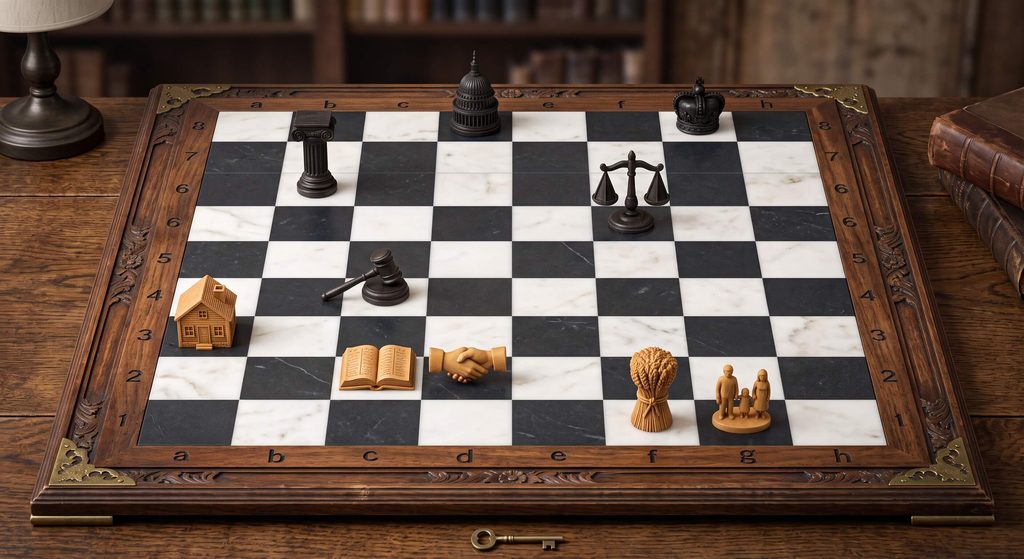
There are two jurisdictions at play (juris = right/law, diction = speak/spoken) that are relevant to this conversation. Two different ways laws are expressed. One is Public and the other is Private. Each one has its own unique set of laws or “guidelines” when dealing with situations that fall under its care. These two jurisdictions coexisted like the white/black squares and pieces on a chessboard. Distinct, easily told apart and were never commingled.
- Public law (statutory) = Governs the relationship between the state and federal government and the people that erected said government.
- Private Law (civil) = regulates relationships, disputes, and transactions strictly between the people.
In order for one to be a part of the Public jurisdiction one must contract into it with the Forum/Venue (location = Fed/State government) or have met the “Minimum Contacts Doctrine” meaning a person or business has enough ties to a specific Forum/Venue that it is legally fair for a court in that state to exert it’s power over them. (ie agreeing to play the game or sitting at the game table). Public regulates the rules of the game (Commerce)
In order for one to be a part of the Private jurisdiction, one all has to do is show signs of life and be present in the Forum/Venue. (being born on the land mass). Private regulates the rules on how people treat each other, at the game table
The Law from the lens of a chessboard
White squares are private. Your land, your labor, your contracts, your money. Common law. Rights you hold because you exist. Rights woven into the very fabric of your existence.
Black squares are public. Statute. License. Privilege. Regulated commerce. Rules that reach you because you stepped onto that square.
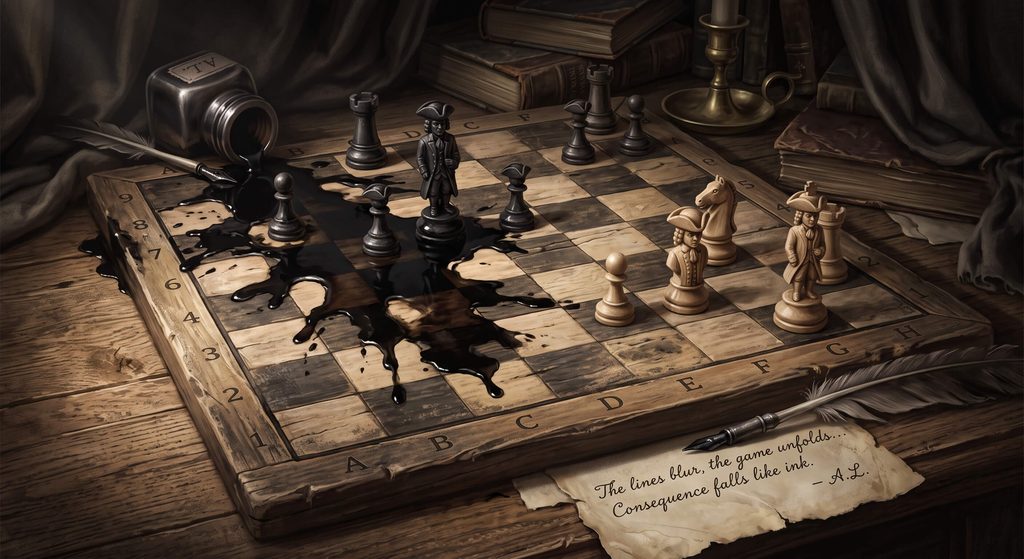
This series reveals the path that was taken to paint the white squares black.
Brief History on the Chessboard
Before we had the constitution of the United States, we operated under the Articles of Confederation for the first decade of our Independence. Under the Articles of Confederation, the people were protected by the state government in which they chartered. Congress could not tax you. It had no power to reach into a single pocket in America.
When Congress needed money it sent a requisition to the states, i.e. a bill, and each state decided how to raise it, or whether to bother. Lets say Philadelphia needed money to pay war debts or wanted to enforce a mandate, they had no legal authority to touch you, it could only request it from the state to collect it on their behalf. The state acted as a total shield between the natural person and the federal apparatus.
Think about what this meant in daily life. A federal agent had no business knocking at your door or sending you direct correspondence about money. They had no reason to even know your name.
If they had a grievance about a tax, they took it up with your local government, and we took it up with the officials who we associated with in our local community, close enough that we might even see them at church or the grocery store. This “state shield” had no workaround, congress had to go through your state every time. This sounded great, but there was an issue.
Friction
The states routinely paid but a fraction of what was requested by congress, and sometimes it would fall short. Because the states were sovereign, the Articles gave Congress no enforcement mechanism. If a state ignored the bill, Congress could not do anything about it. Between 1781 and 1787, states regularly shortchanged the national government, paying only a fraction of what they owed, pushing the young nation toward bankruptcy.
Because the federal government had no direct taxation power, it also had no federal tax collectors, no federal courts to try tax evaders, and no federal bureaucracy interacting with the public. If you were a farmer in Pennsylvania, your tax burden was entirely determined by the Pennsylvania legislature. If you couldn’t pay, it was a local sheriff or a state tax collector who knocked on your door, not a federal agent. The national government was functionally invisible to the average person.
A real problem did exist…but…keep this in mind…
A real problem is the most effective tool ever devised for moving, removing or puncturing a Shield (Wall of Protection). You are going to watch that exact pattern eight more times in this series (1863, 1913, 1933, 1971, 2008) and every single time the crisis will be genuine (although the causes these problems are questionable, at times highly convenient), and every single time the thing built to solve the “problem” will outlive it. This has raised suspicions of possible “engineered emergence” throughout history.
National Unrest
Because that “wall” between the federal government and the individual citizen meant the United States was, mechanically speaking, just a giant, unfunded group project.
4 major issues lead to the first Constitutional Convention to address these matters.
- The National Bankruptcy
The United States ended the Revolutionary War owing millions to France, Dutch bankers, and its own citizens (who had bought war bonds). But because Congress could only ask states for money, the national treasury was completely empty. Congress petitioned the states for funds but barely received enough to cover the interest.
- Mutiny (Newburgh Conspiracy)
The most immediate danger of having no direct tax revenue was the military. A group of high-ranking officers circulated letters threatening to march on Congress, refuse to disband, and essentially stage a military coup to force the government to pay them at gunpoint. George Washington personally pleading with his officers, famously putting on his reading glasses and saying, “I have not only grown gray, but almost blind in the service of my country” that defused the mutiny. If Washington hadn’t been in the room, the United States might have become a military dictatorship before it ever became a constitutional republic.
- State vs. State (Economic Warfare)
Because there was no overarching economic authority, states started acting like rival countries. New York started slapping heavy tariffs on cabbages from New Jersey and firewood from Connecticut. States started printing their own paper money, causing hyperinflation that wiped out the savings of ordinary people. The national economy ground to a halt because trade across state lines became a chaotic, punitive mess.
- The Breaking Point: Shay’s Rebellion (1786-1787)
The ultimate crisis happened in western Massachusetts. The state legislature, trying to pay off its own war debts, levied crushing taxes on rural farmers, requiring payment in hard gold and silver, which the farmers didn’t have. When farmers couldn’t pay, the state courts started seizing their farms and throwing them in debtors’ prison. Led by Daniel Shays, a former Continental Army captain, thousands of armed farmers revolted. They marched on the courts and shut them down, eventually attempting to seize the federal armory at Springfield.
The Fatal Flaw: Congress tried to raise a federal army to put down the rebellion, but they couldn’t force the other states to pay for it. The federal government was completely paralyzed. Massachusetts had to rely on a privately funded militia to finally crush the uprising.
The Aftermath: George Washington, Alexander Hamilton, and James Madison realized that if a localized rebellion could nearly topple a state government while the federal government sat by helplessly, the “wall” of the Articles of Confederation was a suicide pact.
The New Board Arrives
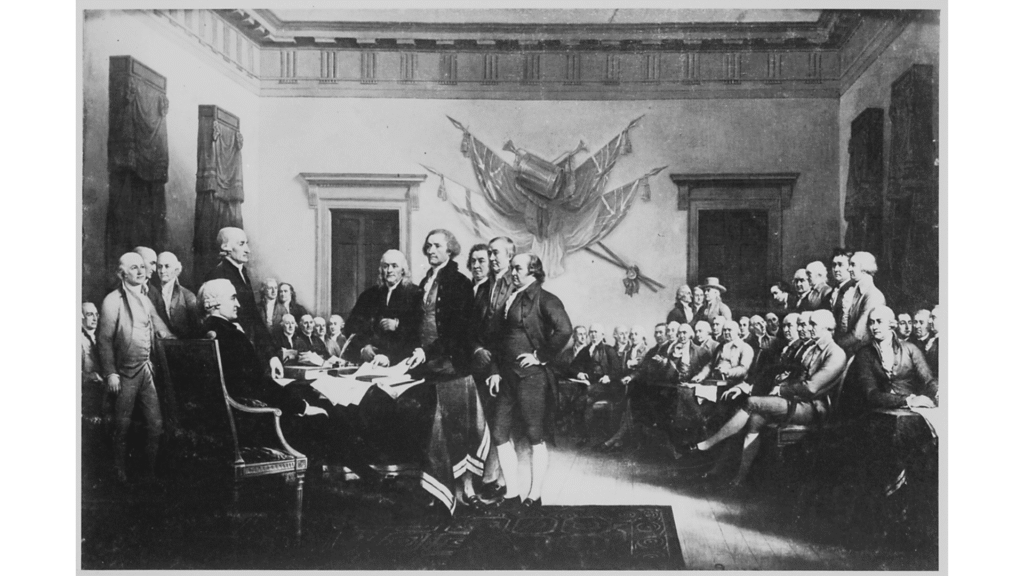
In the summer of 1787, fifty-five men locked themselves inside the Pennsylvania State House and weighed their options. They chose to scrapped the Articles of Confederation entirely.
In its place, they engineered a new machine designed to completely bypass the state legislatures. They drafted a Constitution that would grant the central government direct jurisdiction (the power to tax, draft, and govern the individual citizen without ever asking the state for permission. They had built the door in the wall, and sought to give it life.
By its own terms, this new Constitution was just a proposal until it was ratified by special conventions in at least nine states. The men who wrote it (the Federalists) now had to convince the states to willingly hand over their status as the ultimate shield for their citizens. Those who recognized the danger of this new consolidated power (the Anti-Federalists) sounded the alarm. Nowhere was this clash more dramatic, or more critical to the survival of the republic, than in Richmond, Virginia in the summer of 1788.
The Virginia convention: Nine states had to ratify, and without Virginia, the draft would have no life. Patrick Henry (one of the most influential Founding Fathers) showed up to kill the proposed Constitution, stating that adding “We The People” instead of “We the States” would consolidate all the people of all the states into one national government and do away with the protections that the states offered from being directly impacted by the National Government.
What he saw was that compact between states is a treaty. The parties are governments. If the national government wants something from you, it must go to your state, and your state can say no. A compact with the people is a different animal entirely. The parties are you and Washington City. Your state is not you protector anymore.
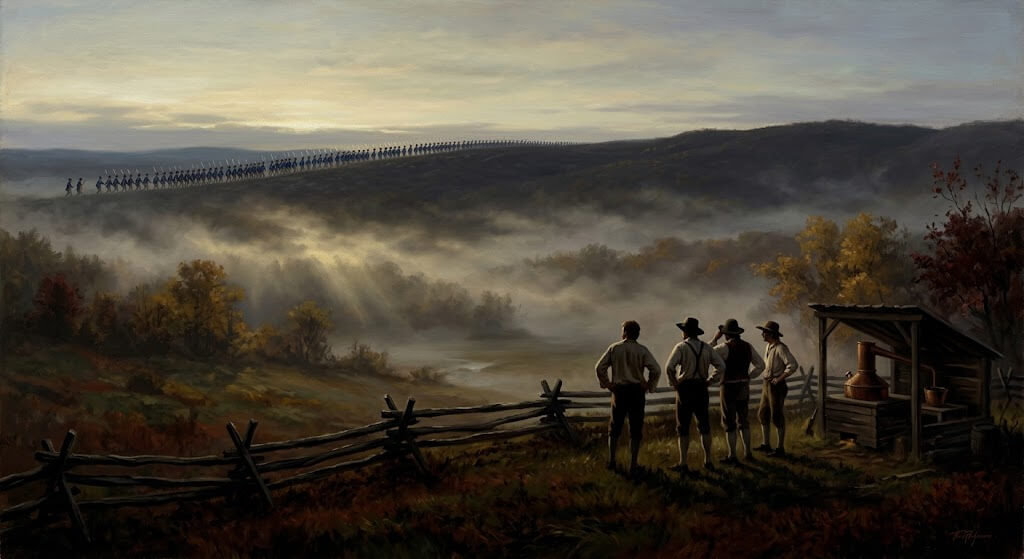
The Whiskey Rebellion: The State wall of protection, now had a way through. Within 3 years of its ratification, the way through was used. On March 3, 1791, Congress enacted an excise on distilled spirits (proposed by Alexander Hamilton) citing (Article 1, section 8, the power to lay and collect taxes) designed to generate federal revenue to pay off the national debt from the Revolutionary War. For farmers in western Pennsylvanian whisky was not a luxury, it was a stable currency they used where hard silver and gold coin were virtually non existent. And Federal collectors went out to the farms…
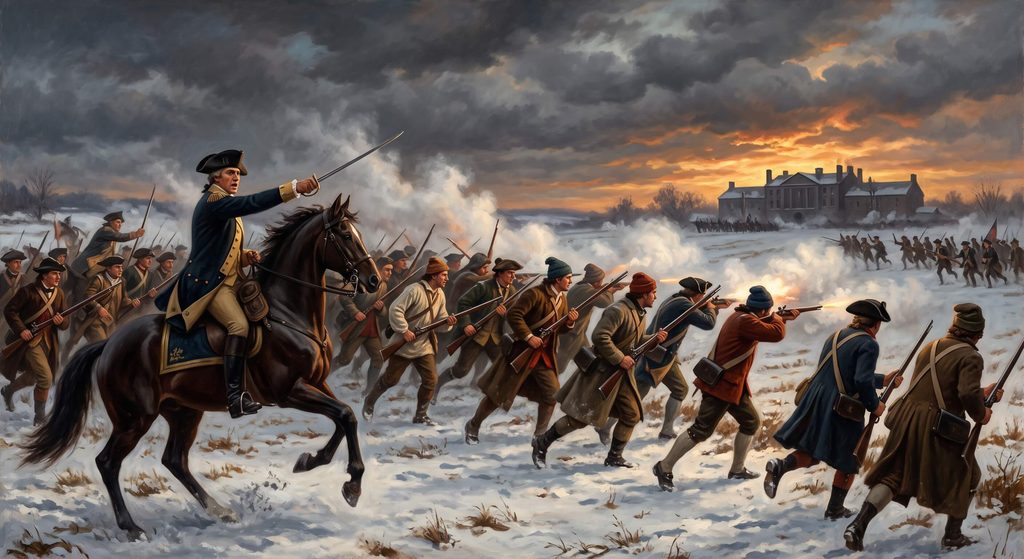
By 1794 the resistance was open, and Washington federalized roughly thirteen thousand militia, a force larger than most armies he commanded during the Revolution, and rode out at their head to put it down. Six years after Henry made his statements in Richmond, a president was riding toward American farmers (over a tax the federal government had collected from them directly) in uniform…The new chessboard had been born.